Water Thoughts

In Honor of “Return of the Waters” Centennial of Saratoga’s Charter.

Water is truly the underlying basis for all life. I love the quote from Star Trek, when an alien being observes “ Humans are no more than ugly bags of mostly water!” Well beauty is in the eye of the beholder, but humans truly are bags of mostly water… Water makes up between 75% and 65% water, depending on age, size and weight of an individual. In addition to being the majority of the substance in every cell, Water helps to maintain many bodily functions. It enables swallowing and digesting foods, lubricates all mucous membranes and joints, maintains normal body temperature through perspiration, absorbs nutrients and eliminates wastes. Besides being the real basis of life in a physical sense, water is intimately linked to spiritual principles.

baptismal-font-869128_640Water is used in spiritual ritual, such as baptism in Christianity, bathing in the holy Ganges River in Hinduism, the Mikvah Cleansing Bath in Judaism, among many other examples. In modern times, Dr Glen Rein, the premier researcher on the energetic properties of water used his unique type of expertise to effect changes in the structure of water with Electro-Magnetic fields, thus changing its physical properties and allowing for its application to produce novel, enhanced effects in products for the skin-care industry, among other healing effects. (https://www.innobioteck.com/water-research.html)

Water was the basis of an entire chapter in the History of Medicine in the United States and Europe. A group of medical practitioners, referred to as The Physiomedicalists and The Hydropaths, were branches of medicine based on healing modalities referred to as ‘water cures.’ Many personalities were involved in this movement. Alva Curtis was the founder of the Physiomedicalist Philosophy. In 1835, Curtis opened the ‘Botanicomedical School and Infirmary’ at Columbus, Ohio, which used water cures among its healing procedures.

Vincent Priessnitz (1799-1852) was known as The Sponge Doctor. He was born a peasant in Silesia (now Czech Republic) and never attended medical school , but Priessnitz became one of the most famous healers of all time. He set in motion the forces which would lead to the establishment of hydrotherapy as a legitimate healing medical entity. Priessnitz observed that cattle and deer who had inflammation submersed the effected body parts in cold water, and it seemed to bring relief to their conditions. He then developed the cold water Priessnitz compress therapy by experimenting on his own farming injuries and treating local people in his village. Vincent Priessnitz coined the phrase “ Nothing is impossible to nature, diet, & cold water”. He was arrested several times for practising medicine, but always acquitted because “he was only using water”. Authorities decided to attack him as a sorcerer, and raid his place, looking for drugs, and in frustration, cutting up all his bewitched sponges! However, persecution didn’t embitter him, but only made him more famous. In 1826, he opened his own hydrotherapy institute, with a 45 patient residential capacity which filled instantly! This increased to many institutions with 1600 bed capacity all filled to the brim! Eventually, the Austrian government endorsed his practice and gave him the same status as a medical doctor, building new roads up to his establishments!

An important figure in the development of “ water medicine’ was Dr. Sebastian Kneipp (1824-1897). Kneipp was born very poor in Bavaria. He was very sickly from poor diet and developed tuberculosis. He stumbled upon a book by Hahn (a student of Priessnitz ) about the use of the water cure. After 6 months, he regain his health. Kneipp was ordained as a priest and treated his parishioners with the water cure, becoming known as the cholera vicar. People from all over the world came to be healed by his method of hydrotherapy. Kniepp believed that disease came from deranged blood; water healed by removing toxins restoring normal circulation, and strengthening the body.

Kniepp’s student, Bennedict Lust came to the United States in 1892 , and brought his brand of hydrotherapy to Americans. He also established the first health food store in America, and is known as The Father of American Naturopathy. Lust’s efforts were   supported by his wife Louisa Lust, N.D., who was already an esteemed physician before marrying Dr. Lust. She ran the Yungborn Sanitarium in Butler NJ, one of the premiere healing centers in the United States. The use of water as a respected healing modality continues today among Licensed Naturopathic Physicians (ND’s). They are highly training in the long history and evidence based healing effects linked to the use of water as a healing modality, such as colonic irrigation, enemas, contrast hydrotherapy and fever treatments, just to name of few. These time tested ‘drugless’ therapies bring great relief to millions, as they have throughout history. The waters of Saratoga Springs have a long history of applications, both for bathing and internal use, and as we move forward into modern times, they will hopefully once again be respected, protected and revered!

Ellen Kamhi, PhD, RN, AHG, AHN-BC is on the Peer Review Editorial Board of several journals/organizations, including: Alternative Therapies in Health and Medicine, Natural Medicine Journal, Natural Standard Database.  954-418-2388

Thyroid Function and Healthy Weight Maintenance

Thyroid Function and Healthy Weight Maintenance

By Ellen Kamhi PhD RN, www.naturalnurse.com

Thyroid
By CFCF (Own work) [CC BY-SA 3.0], via Wikimedia Commons
The thyroid gland is a butterfly-shaped organ that wraps around the windpipe right behind the ‘Atom’s Apple’. It is the largest of the body’s endocrine glands. The thyroid gland produces several different hormones that are extremely important to the function of a vast array of metabolic processes in the body, including brain development, mood and weight regulation. A surprising number of people have some kind of abnormal function of the thyroid gland. The Colorado Thyroid Disease Prevalence Study tested 25,862 people, and found that over 9% of them had undiagnosed thyroid dysfunctions. This translates to 13 million Americans who may have this problem. In addition, this study researched the link between ‘subclinical’ low thyroid function and high cholesterol levels. Subclinical means that the low function of the thyroid is not discovered through normal tests performed by most conventional physicians.

The thyroid gland plays a key role in weight problems because it controls the body’s overall metabolic rate. When it’s not working properly, it may lead to an array of health problems, including weight gain, arthritis, depression cold hands and feet, dry skin, high cholesterol, chronic constipation and hair loss. Symptoms caused by low thyroid function are so varied, that they can easily be confused with those of other conditions.


The thyroid is the body’s metabolic thermostat, controlling body temperature, energy use, and, in children, the body’s growth rate. The thyroid controls the rate at which organs function and the speed with which the body uses food. When the thyroid is dysfunctional, there are a number of ways that it can seriously impact your weight.

Correct thyroid function keeps the body at a normal, resting temperature of 98.6° F. The thyroid sends chemical messages via hormones to every cell in the body, directing the maintenance of body temperature, heart rate, and muscle movements. When the thyroid is dysfunctional or underactive (hypothyroidism), it sends out fewer hormones, causing metabolism to slow down. When metabolism slows, the body will store rather than burn calories, causing an accumulation of fat.

Low thyroid function   also leads to a sluggish digestive system, often resulting in a number of gastrointestinal problems, including constipation, gas and bloating, abdominal pain, and decreased absorption of nutrients. Decreased digestive efficiency may lead to a condition called leaky gut syndrome, in which undigested food particles enter the bloodstream causing allergic reactions and depleting the immune system. Weight gain is one of the potential results of these digestive disturbances. Because low thyroid function causes fatigue and lack of stamina as well as muscle aches or weakness, people with this condition may find it difficult to exercise which is another factor in weight problems.

Thyroid problems have been on the rise due to the increasingly toxic environment in which we live. Exposure to radiation, fluoride (in water and toothpaste), mercury from silver amalgam dental fillings, pollutants (thyocyanide) in cigarette smoke, and chlorinated compounds (found in wood and leather preservatives) are just a few of the many causes of hypothyroidism. Radiation is probably the greatest environmental cause of hypothyroidism and other thyroid problems, including thyroid cancer. PCB’s (Polychlorinated biphenyls) , chlorinated pesticides, and heavy metals such as mercury(which comprises up to 50% of silver amalgam fillings) have been scientifically proven to disrupt endocrine function.   Even at low exposure levels during pregnancy, environmental contaminants can interfere with thyroid status in later life. Heavy metals also interfere with an enzyme critical in converting the inactive form of thyroid hormone (T4) into the active form (T3).

Dietary factors that depress thyroid function include synthetic and genetically engineered hormones in meat, dairy products, poultry, and eggs, which block the release of thyroid hormones, and either a deficiency or excess of the mineral, iodine. Although deficiencies are rare in developed countries, excess accumulation occurs due to an overabundance of iodine in commercial salt, baked goods (in dough conditioners) and dietary supplements. Some vegetables that have a wide variety of health benefits, such as raw cruciferous vegetables (cabbage, broccoli, cauliflower, brussel sprouts) contain thyroid inhibitors called goitrogens, that may cause an enlargement of the thyroid gland and inhibit hormone synthesis. However, lightly steaming the vegetables stops the activity of the thyroid-suppressing substances. Soy products, especially if not fermented, may depress thyroid function. Other dietary influences include vitamin deficiencies (particularly vitamins A and B), mineral deficiencies (zinc, copper, iron, and selenium), and excess intake of polyunsaturated fats ,such as soybean, safflower, and corn oils. Alternative medicine practitioners generally begin to treat hypothyroidism by strengthening intestinal health and digestion. To help spark proper thyroid function a combination of specific foods, nutrients, exercises and therapies is needed. Thyroid glandular therapy and thyroid hormone therapy may be indicated.

Gugulipid, an Ayurvedic herb that has been used in India for over 2,500 years, is helpful for supporting the thyroid. Studies have shown that gugulipid stimulates thyroid function. Gugulipid is often available as an extract standardized to 2.5-5% guggulsterones. Yoga, Tai chi and Castor Oil packs can also be used in a thyroid healing protocol. . Proper nutrition combined with regular exercise can help restore a weakened thyroid, and lead to weight loss as well!

Ellen Kamhi PhD RN, The Natural Nurse®, can be heard on radio daily. She is the author of several books, including Weight Loss, The Alternative Medicine Definitive Guide.

Dr. Kamhi has been involved in natural health care for over 4 decades. She answers consumer questions and has a private nutrition consultation practice. www.naturalnurse.com 954-418-2388

Featured Image Credit: By CFCF (Own work) [CC BY-SA 3.0], via Wikimedia Commons

CASTOR OIL PACK- WONDERFUL RELIEF FOR WHAT ‘AILS YA’

Castor Oil (Ricinus communis)

The Ancient Oil that Soothes and Smoothes…

By Ellen Kamhi PhD, RN, AHG, AHN-BC

FACTS: Castor oil comes from the castor bean- which is poisonous!

Castor Bean Plants are also called “The Palma Christi”

Castor Oil was recommended for healing by the famous psychic, Edgar Cayce

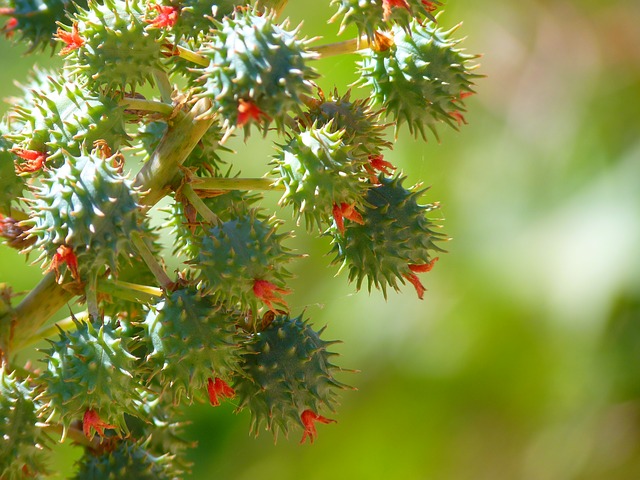
castor oil plantThe Castor bean is the seed of an herbaceous plant which is cultivated in the temperate climates, often as an ornamental. It grows from 3-10 feet tall. Its native cousins in Asia, Africa and the West Indies can grow to 30-40 ft high! The plant itself is quite poisonous; a child can die from ingesting a single castor bean. However, the light yellow oil pressed out of the bean is safe to use, since the toxic constituents remain in the seeds. The castor bean plant is also known as The Palma Christi, or Hand of Christ, due to the shape of the leaves and its healing properties. Castor oil is mentioned in the ancient Egyptian medical scrolls, the Codex Ebers. The Egyptians used castor oil as a laxative for cleansing the bowels and as a scalp rub to make hair grow and shine. The well known laxative effect is probably due to the active constituent ricinolein, which is a mild irritant to the large intestines. Many senior citizens probably remember their Grandparents reaching for the Castor oil at the first sign of illness.

Throughout history, castor oil has enjoyed popularity as a healing substance. Dr. Forest Clinton Jarvis in his 1958 best selling book Folk Medicine, describes many medicinal uses of castor oil. “Apply it to moles, warts and skin ulcers to remove or lessen the blemishes. Or, rub a small amount on the hair and eye lashes to make them more luxuriant”. Castor oil rubbed into sore joints and muscles right prior to heat application treatment reduces the pain and swelling of rheumatism.

Edgar Cayce, the famous American psychic who lived in the 1940’s, spoke often about the use of a castor oil pack. This is a gentle treatment suggested by Cayce for non-malignant ovarian fibroids and cysts, breast swellings and cysts, headaches, liver problems, constipation and other ailments involving elimination.

castor oilMaking a Castor oil pack…

Materials :

Organic castor oil, Undyed wool flannel, a heating pad or hot water bottle, a plastic sheet, and some terry cloth towels.

Directions:

1)Soak the flannel in warmed castor oil and then place it onto the body over the area you wish to treat.

2) Cover the flannel with a piece of plastic. A small garbage bag works fine for this.

3) Place the heating pad over the plastic. Keep it on a warm setting. You may choose to use a hot water bottle instead of the heating pad.

4) Cover all of this with a towel to keep the surface you are laying on from becoming soiled and to keep in the warmth. Fasten the towel around you with a safety pin, or use an ace         bandage to secure everything in place.

5) Relax completely for one to two hours before removing the entire pack. The procedure is an excellent stress reducing modality and feels soothing. It can be used for all ages, except for placing it on the lower abdomen of a pregnant woman.

If you do the treatment over your abdomen, it may cause some mild cramping sensations over the right upper quadrant. This may be an indication that the Castor oil is stimulating the liver and Gallbladder. This is quite normal, so don’t be alarmed. Also, You may have a loosened bowel movement several hours after the pack. Again, this is quite a normal occurrence. AVOID IF PREGANT, unless the midwife or obstetrician directs you to do so/; as castor oil can begin and accelerate labor or cause premature miscarriage.

So, the next time you want a time honored, gentle healing method that is guaranteed to soothe and smooth, reach for the castor oil. You’ll find it, as you reach into, The Natural Medicine Chest.

Ellen Kamhi PhD, RN, The Natural Nurse®, can be heard on radio daily. She is the author of several books, including THE NATURAL MEDICINE CHEST. Dr. Kamhi has been involved in natural health care for over 4 decades. She answers consumer questions and has a private practice. www.naturalnurse.com   954-418-2388. Dr. Kamhi will be lecturing at CUNY group meeting on Wed Feb 4 th, 7 pm, at GP-A in the Clubhouse. All CV residents are invited.

5 Supplements You Need , But May Not Have Even Heard About

5 Supplements You Need  , But May Not Have Even Heard About


Ellen Kamhi , PhD, RN, The Natural Nurse, is a medical school instructor, master herbalist and author of THE NATURAL MEDICINE CHEST. Facebook/NaturalNurse


Eating healthy whole foods is the best way to be sure you are getting all the nutrients you may need. Unfortunately, our modern lifestyle often makes it difficult to eat correctly. In addition modern farming methods have depleted many nutrients from the soil. In addition to the ‘every day’ requirements of common vitamins , such as Vitamin B and Vitamin C, there are many other nutrients that the body requires in order to thrive at optimum levels.


1. Quercetin—Quercetin is a naturally occurring bioflavonoid (vitamin C helper) found in many species of plants, including the oak, onion, and blue-green algae. As a bioflavonoid, it has powerful antioxidant and anti-inflammatory properties and has been used by alternative practitioners for many years in the treatment of arthritis, autoimmune diseases, asthma, and cataracts. Quercetin blocks inflammation that can otherwise lead to leaky gut syndrome. Quercetin  represents one of nature’s most perfect medicines. By decreasing the rapid opening of mast cells and basophils—white blood cells which release histamines—quercetin stabilizes the gut and decreases permeability. Recommended dosage: 200 mg, 2-3 times daily between meals.


2. Glutamine—The amino acid glutamine is an important nutrient. An increase of L-glutamine in the diet has been shown to support intestinal and overall health.  Glutamine reduces unwanted movement of bacterial forms into general circulation, where they can often end up in the joints and instigate or aggravate arthritis.  Glutamine is used in the synthesis of an important nutrient known as N-acetyl-D-glucosamine (NAG), which is fundamental to the production of the protective mucus lining the digestive and respiratory tracts. Glutamine supplementation also enhances glutathione, an important antioxidant.


3. Glutathione—Glutathione is a tri-peptide, a small protein consisting of three amino acids, that functions as a principle antioxidant, scavenging free radicals and toxins that would otherwise damage and destroy cells. Further, glutathione regulates the activities of other antioxidants, such as vitamins A, C, and E. Vitamin C can also help increase glutathione levels. When the body is overrun by free radicals, supplies of glutathione become depleted. This condition, known as oxidative stress, negatively affects the musculoskeletal, nervous, immune, and endocrine systems. Glutathione exerts another protective and scavenging role in concert with the liver, the body’s primary organ of detoxification and internal cleansing. In the liver, glutathione combines with toxins, carcinogens, and waste products as a way of neutralizing them and then more effectively securing their elimination from the body. In addition, glutathione helps red blood cell membranes retain their structure, and must be present for white blood cells to perform their function of immune regulation.


4.  N-Acetyl-D-Glucosamine—N-acetyl-D-glucosamine (NAG) is a sugar that is important to the formation of a type of mucus, glycocalyx, that protects the delicate intestinal tissues and acts as a first line of defense against bacteria, fungi, and viruses. These disease-causing microorganisms attempt to adhere to the cell surface and invade the intestinal walls. NAG also functions as a decoy sugar, attracting and binding dietary lectins, which then prevents them from attaching to the gut. People with a compromised gastrointestinal lining are more likely to experience the irritation caused by food allergies, dietary lectins, and bacterial, fungal, and viral organisms. Also, they are more susceptible to the damage due to aspirin, NSAIDs, and the contents of their own intestines, such as bile acid. Again, elevated levels of circulating immune complexes are the end result, which cause inflammation. NAG promotes the growth of friendly bacteria and is quickly digested by healthy intestinal bacteria.


5. Essential Fatty Acids—The kind of fats and oils that we take into our bodies are of paramount importance in determining the amount of inflammation we experience. A significant reduction in lab indicators of inflammation after using omega-3 fatty acids has been verified in clinical studies. These fatty acids are found in fish oils and certain vegetable oils, such as flaxseed and hemp seed oil. In addition to omega-3 fatty acids, borage seed oil and evening primrose oil, which contain large amounts of gamma-linolenic acid (GLA), an omega-6 oil, cause clinical improvement.


6. FOS (fructo-oligosaccharides)– known popularly as “fast food for probiotics.” FOS is a natural sugar found in food sources such as Jerusalem artichokes, onions, barley, honey, asparagus, and garlic. It provides a growth medium for beneficial bacteria in the intestines.